
A century of subordination: The historical barriers to dental hygienists’ autonomy
Part 2 of 6
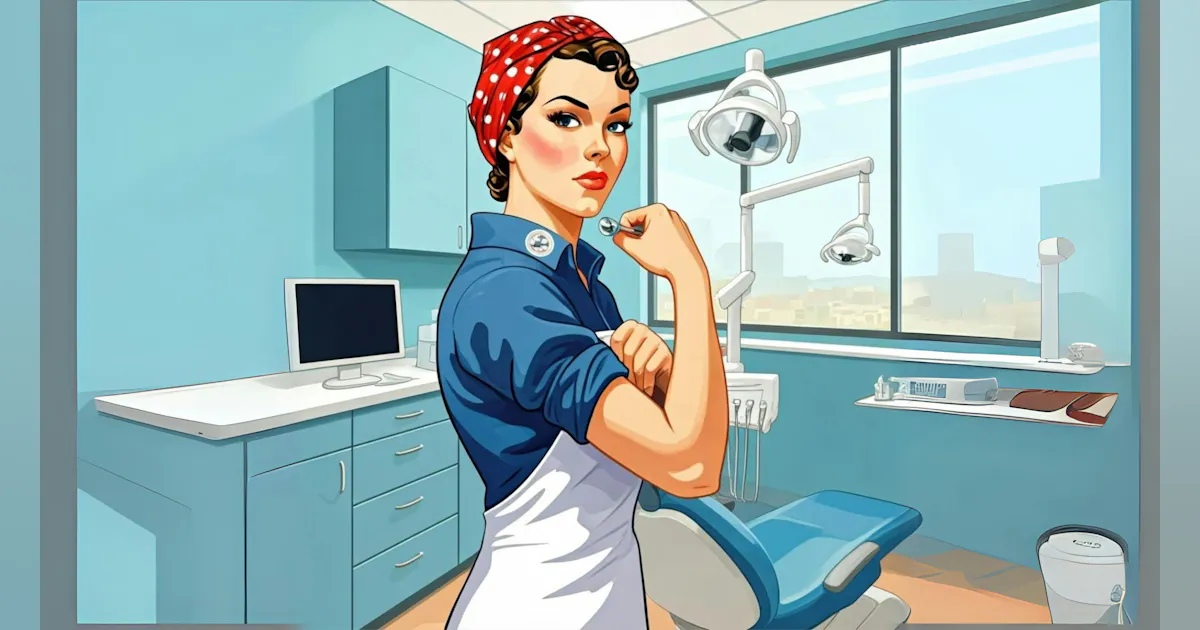
It shouldn’t take a man to say this, but here we are
The irony of a white, cisgender man addressing the entrenched sexism in dentistry is not lost on me. Yet, research suggests that men are more likely to engage in discussions about sexism when another man leads them,1,2 a paradox that only reinforces the very bias this article seeks to expose.
With that in mind, while the women in my profession may find little here that surprises them, my true audience is the legislators, policymakers, and male leaders in dentistry who may be open to an honest evaluation of why systemic change is needed.
This is an unfiltered examination of the structural sexism embedded in dentistry, a profession that has long constrained the autonomy of hygienists under the pretext of safety and oversight.
The gendered origins of dental hygiene
In 1906, Dr. Alfred Fones trained his cousin, Irene Newman, as the first “dental nurse,” introducing the novel idea that a nondentist could provide preventive oral health care.3 Though revolutionary, this concept was quickly gendered. Women were viewed as naturally suited for the nurturing role of health maintenance and prevention, fitting well into the societal norms of the time.
It should be noted that although Fones is credited with founding the first successful dental hygiene program in 1913,3 it was not the first attempt. The earliest known program was established in Ohio in 1910.4 However, it closed quickly due to intense resistance from Ohio dentists,5 foreshadowing the first of many battles between organized dentistry and the emerging dental hygiene profession. Although organized dentistry opposed the idea of dental hygienists, the role’s exclusively female composition made it easier to control.
Parallel struggles: Women’s civil rights
I realize my last statement will make some uncomfortable, but when taken in the context of the time, it’s difficult to deny because the professional subjugation of dental hygienists mirrors the broader historical struggle for women’s civil rights in the US. The 19th Amendment, granting women the right to vote, was not ratified until 1920.6 For decades after, women remained legally and financially tethered to men, unable to open a bank account or secure a mortgage without a male cosigner until the passage of the Equal Credit Opportunity Act in 1974.7
This forced dependency has an uncanny parallel in dentistry. Just as women were deemed incapable of managing their finances, dental hygienists were deemed incapable of managing their own patients and practices. The result? A power structure in which control remains concentrated in the hands of a male-dominated profession, while those doing the bulk of the work operate under artificial constraints.
Systemic barriers: Current and historical
Despite progress in gender equality, dentistry remains one of the slowest professions to shed its patriarchal roots. While women have gained autonomy elsewhere, dental hygienists in most states still need a dentist’s permission to practice, a restriction imposed by male-dominated dental boards intent on preserving control. Even within their own profession, women make up less than 38% of dentists,8 a notable increase, but the field remains male-dominated.
In many ways, the struggle for dental hygiene autonomy mirrors nursing’s fight for professional recognition, with both fields facing systemic efforts to limit their independence under the pretense of patient safety.9 While nurses eventually won the right to diagnose, prescribe, and practice independently in many states, it took years of resistance against organized medicine.10
Dental hygienists now face similar opposition in their push for autonomy,11 reinforcing a pattern that when women dominate a profession, it is systematically suppressed, forcing it to fight for legitimacy and the ability to serve the public fully.
Historically, laws and regulations ensured the profession remained predominantly female, making it easy to dismiss, undervalue, and control. O’Shea states in his 1971 article that hygienists “by state law or custom … can only be female.” 12 Even the American Dental Hygienists’ Association’s own constitution had to be amended in the 1960s to remove the word “female,” paving the way for the first male hygienist in 1965. While these restrictions were lifted, the profession continues to grapple with the lasting impact of its exclusionary history within a broader system that still devalues female-dominated fields.
link


:max_bytes(150000):strip_icc()/Health-GettyImages-1413749294-1e0959850fd24395b36963b6b3f2e109.jpg "What Happens to Your Muscles When You Take Amino Acid Supplements?")