Impact of stress and preoperative psychological preparation on immunity, inflammatory responses, and surgical outcomes in adults undergoing elective surgery with general anesthesia in Palestine
The current study findings revealed that 31.4% of patients who participated experienced stress. Furthermore, many studies indicate a link between preoperative stress and poor patient outcomes, which suggests that significant levels of patient-reported preoperative anxiety independently predict a greater risk of in-hospital mortality or major morbidity9. Thus, to reduce preoperative stress, it is necessary and recommended that every patient have their anxiety assessed. Although there were a few cases of postoperative complications (4.5%), this might be attributed to the antibiotics being administered to patients post-operation, potentially masking the occurrence of these complications. According to our study, 71.2% of patients who experienced complications after surgery were suffering from anxiety preoperatively, which is consistent with many studies that emphasized that increasing preoperative anxiety levels lead to disrupted recovery from anesthesia, control of postoperative pain, and patient satisfaction10,11. In our study, there was no direct correlation between changes in white blood cells and complications after the operation, so we cannot prove that changes in white blood cells, neutrophils, or lymphocytes increase the chance of postoperative complications.
In our study population, stress among females was greater than that among males, which is consistent with other studies indicating that female patients reported significantly more preoperative anxiety than male patients did12,13. Another study revealed that females have higher anxiety levels and that women have greater immune responsiveness than men do; moreover, sex hormones can alter immune responses, potentially increasing their susceptibility to autoimmune disorders and stress-related issues, thereby increasing their immune status14.
An evaluation of the effects of age groups on anxiety revealed that age was not found to affect anxiety levels, as individuals across all age groups presented similar levels of anxiety; thus, there was no specific age group susceptible to stress or a change in immune state. Several previous studies have shown that anxiety varies by age group, with younger people showing greater susceptibility to stress and worry under different conditions15,16.
White blood cells (WBCs) and their differentials were utilized as immune mediators, in alignment with a similar previous study, which revealed significant and positive relationships between stress-induced changes in perceived stress and the number of leukocytes and neutrophils and negative relationships between stress-induced changes in the CD4+/CD8 + ratio and stress-induced changes17. This study revealed that patients who experienced anxiety had a lower mean white blood cell count than did those who did not, which was statistically significant and compatible with another study that clarified the complex interaction between WBCs and stress. Humans respond to acute stress by increasing the quantity of leukocytes, or white blood cells, in the blood. These leukocytes originate from the lymph nodes, bone marrow, and spleen, among other locations. However, as the stress disappears, these cells either return to their original compartments or migrate to other organs (such as the skin or lungs). Leukocytes enter the bloodstream minutes after stress begins. Monocytes, lymphocytes, T helper cells, cytotoxic T cells, B cells, and natural killer cells all decrease in number throughout this phase, but neutrophils continue growing. Understanding the entire dynamics of this response is essential. While later measures predominantly show trafficking (decreased numbers), early measurements during stress primarily reflect mobilization (increased numbers). This disparity explains why, during and after acute stress, human studies frequently indicate an increase in blood leukocyte counts, whereas other studies show decreases5.
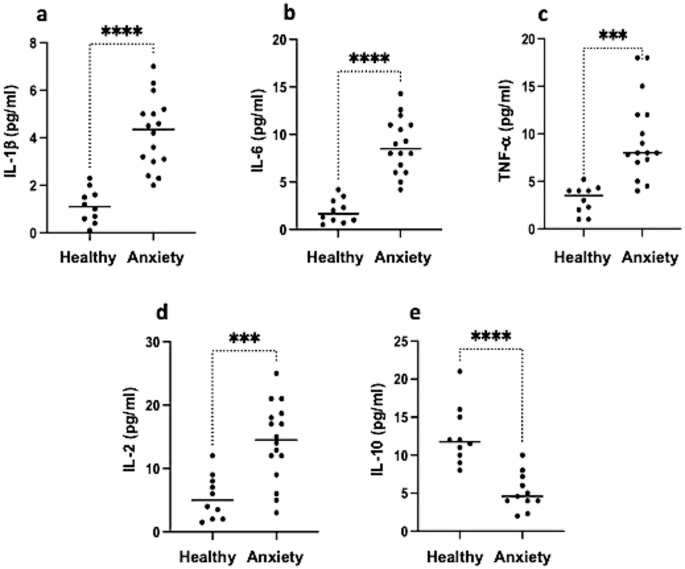
This study is highly coherent with our study in which there was a significant correlation between the changes in lymphocytes and neutrophils and stress levels. There was a clear increase in the neutrophil percentage among stressed patients, which is explained above, and in contrast, there was a significant decrease in the lymphocyte count. Similar results have been obtained in many studies that demonstrated how stress levels affect the numbers and functions of leukocytes and their precursors and that the immunological response decreases with increasing stress exposure18. Some stressors lead to the activation of the hypothalamic‒pituitary‒adrenal (HPA) axis as well as the sympathetic nervous system, thereby interfering with immune and inflammatory signals. Several proinflammatory cytokines have been associated with systemic inflammation, and their modulation of mood and appetite has been suggested to contribute to anxiety. The study’s findings revealed significantly increased levels of IL-1β, IL-6, TNF-α, and IL-2, along with a notable decrease in IL-10, reflecting a disruption in the inflammatory balance among anxious patients. These results reinforce the role of acute stress and anxiety in modulating immune responses and may help identify potential therapeutic targets.
This phenomenon is further illustrated by findings from a physiological stress model involving parachutists, where researchers measured plasma catecholamine and cortisol levels in addition to enumerating blood T and NK cells. The number of T and NK cells increased immediately after a high jump, followed by a significant decrease one hour later, highlighting the dynamic and time-sensitive nature of immune cell trafficking in response to acute stress19.
According to previous studies, stressors stimulate the hypothalamic‒pituitary‒adrenal axis and the sympathetic nervous system, which disrupts immunological and inflammatory responses. Proinflammatory cytokines are linked to systemic inflammation. Research comparing the cytokine profiles of people with and without anxiety revealed increased levels of proinflammatory cytokines and decreased levels of anti-inflammatory cytokines, indicating that stress plays a role in immune responses and immunity. A meta-analysis of 34 studies was performed that measured circulating inflammatory markers, and 15 studies that measured stimulated production of inflammatory markers before and after exposure to acute stress were included. The results revealed significant stress-related increases in the levels of circulating interleukin (IL)-1β, IL-6, IL-10, and tumor necrosis factor (TNF), but not in the levels of IL-1ra, IL-2, interferon-γ, or C-reactive protein20.
The study revealed that the sources of preoperative information about the procedure significantly affect stress levels. In particular, individuals who obtained information from the internet experienced higher levels. This highlights the importance of engaging with healthcare providers to reduce anxiety. Previous studies have debated the effect of preoperative education on post-surgery pain10. Some studies, such as “Preoperative education for hip or knee replacement,” have suggested that preoperative education stratified according to physical, psychological, and social needs can be beneficial, especially for patients with depression, anxiety, or unrealistic expectations21.
In this research, our strengths included ease of communication with patients, the presence of an anesthesia clinic that facilitates access to patient information and laboratory results preoperatively, the ability to draw blood samples during surgery, and the ease of transporting samples to a laboratory at the university to obtain CBCs.
However, there were several limitations, such as the collection of samples from a single hospital, which might affect the ability to generalize our results. Another difficulty we faced was the inability to accurately assess postoperative complications due to antibiotic intake post-operation as a protocol in the hospital and the difficulty of asking patients one by one about their complications, as many of them did not respond immediately or at the right time.
link



:max_bytes(150000):strip_icc()/Health-GettyImages-1413749294-1e0959850fd24395b36963b6b3f2e109.jpg "What Happens to Your Muscles When You Take Amino Acid Supplements?")